

High Pressure Gas Quenching (HPGQ) with N2/He
High Pressure Gas Quenching (HPGQ) with N2/He
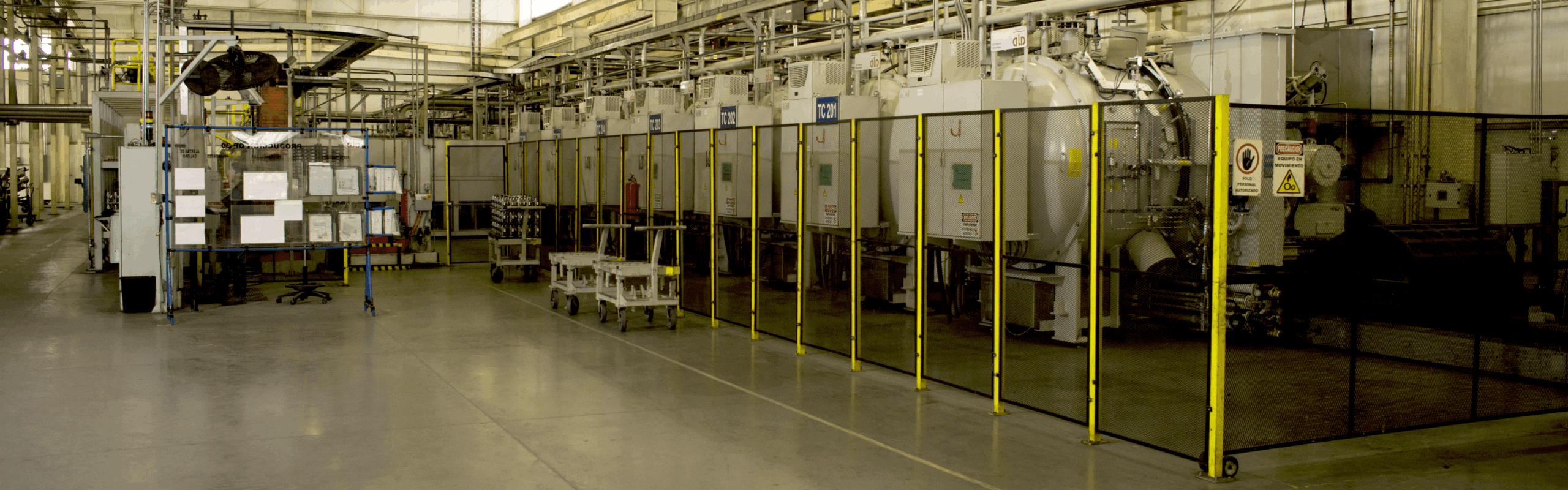
During High Pressure Gas Quenching (HPGQ) previously austenitized respectively thermochemically treated parts are quenched in an inert gas flow in a pressure range between 1 bar and 20 bar with gas velocities between 0,5m/s and 20m/s.
Depending on the geometry and the steel-grade of the quenched component, either helium or nitrogen is used. Helium provides a stronger quench-intensity and is therefore recommended for components with lower hardenability or for components with larger wall thicknesses.
HPGQ is combined in most cases with a vacuum heat treatment such as low pressure carburizing (LPC). HPGQ is usually followed by a tempering process.
The goal of the gas quenching process is to improve hardness. Upon completion of austenitization, the parts are subjected to HPGQ in order to change the microstructure from austenite into martensite, thus obtaining the desired increase in hardness.
During High Pressure Gas Quenching (HPGQ) previously austenitized respectively thermochemically treated parts are quenched in an inert gas flow in a pressure range between 1 bar and 20 bar with gas velocities between 0,5m/s and 20m/s.
Depending on the geometry and the steel-grade of the quenched component, either helium or nitrogen is used. Helium provides a stronger quench-intensity and is therefore recommended for components with lower hardenability or for components with larger wall thicknesses.
HPGQ is combined in most cases with a vacuum heat treatment such as low pressure carburizing (LPC). HPGQ is usually followed by a tempering process.
The goal of the gas quenching process is to improve hardness. Upon completion of austenitization, the parts are subjected to HPGQ in order to change the microstructure from austenite into martensite, thus obtaining the desired increase in hardness.
High pressure gas quenching is an environmentally friendly and low distortion quench process compared to liquid quenching such as oil, polymer or water. The “dry” gas quenching has the following advantages compared to liquid quenching:
- metallic, blank surfaces of parts after heat treatment, no washing of parts necessary
- Environmentally friendly process (no disposal of oil, salt bath residues or detergent residues)
- Full flexibility to control quench intensity
- Potential to reduce heat treat distortion (unwanted changes of the part-geometry during heat treatment in form and size)
High Pressure Gas Quenching
Related Industries

Automotive
Heat treatment is essential in the automotive industry for enhancing strength, wear resistance, and fatigue life of critical components such as gears, shafts, bearings, and fasteners.

Aerospace
In aerospace applications, heat treatment improves mechanical properties while meeting strict requirements for strength, weight, and reliability.
General Industry
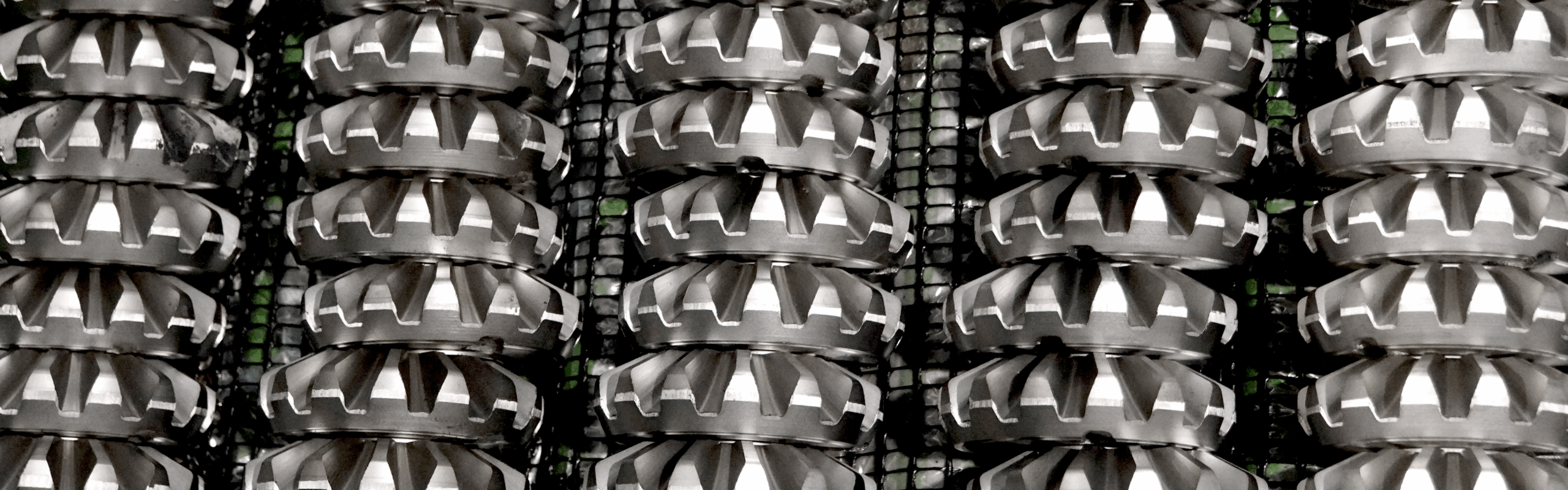
Heat treatment provides general industrial components with improved durability, wear resistance, and material consistency.
Tool and Die
For the tool and die industry, heat treatment is critical to achieving precise hardness, toughness, and dimensional stability.

Medical
In the medical industry, heat treatment enhances strength, corrosion resistance, and fatigue performance of precision components used in surgical instruments and medical devices.
Energy and Mining
Heat treatment is vital in the energy and mining sectors for improving toughness, wear resistance, and resistance to fatigue and impact.
Process Locations
Any questions? Contact us directly or select a process location near you.
Why Choose Heat Treatment Services
Find out how HTS can help your Business
Expertise you can trust
Built on years of proven experience, we deliver solutions you can rely on. Our expertise ensures consistent quality and measurable results.
High Performance
We deliver high-performance solutions designed for maximum efficiency. Driven by innovation, we help you achieve more, faster.
Global Company
Operating worldwide, we bring local insights with global reach. Wherever you are, our network is ready to support your success.
Sustainability
Committed to sustainable practices, we create value with responsibility. Our solutions balance performance with long-term environmental impact.